HYBRID ELECTRIC VEHICLES (HEVs)
- Home
- Resources
- HYBRID ELECTRIC VEHICLES (HEVs)
HYBRID ELECTRIC VEHICLES (HEVs)
Hybrid Electric
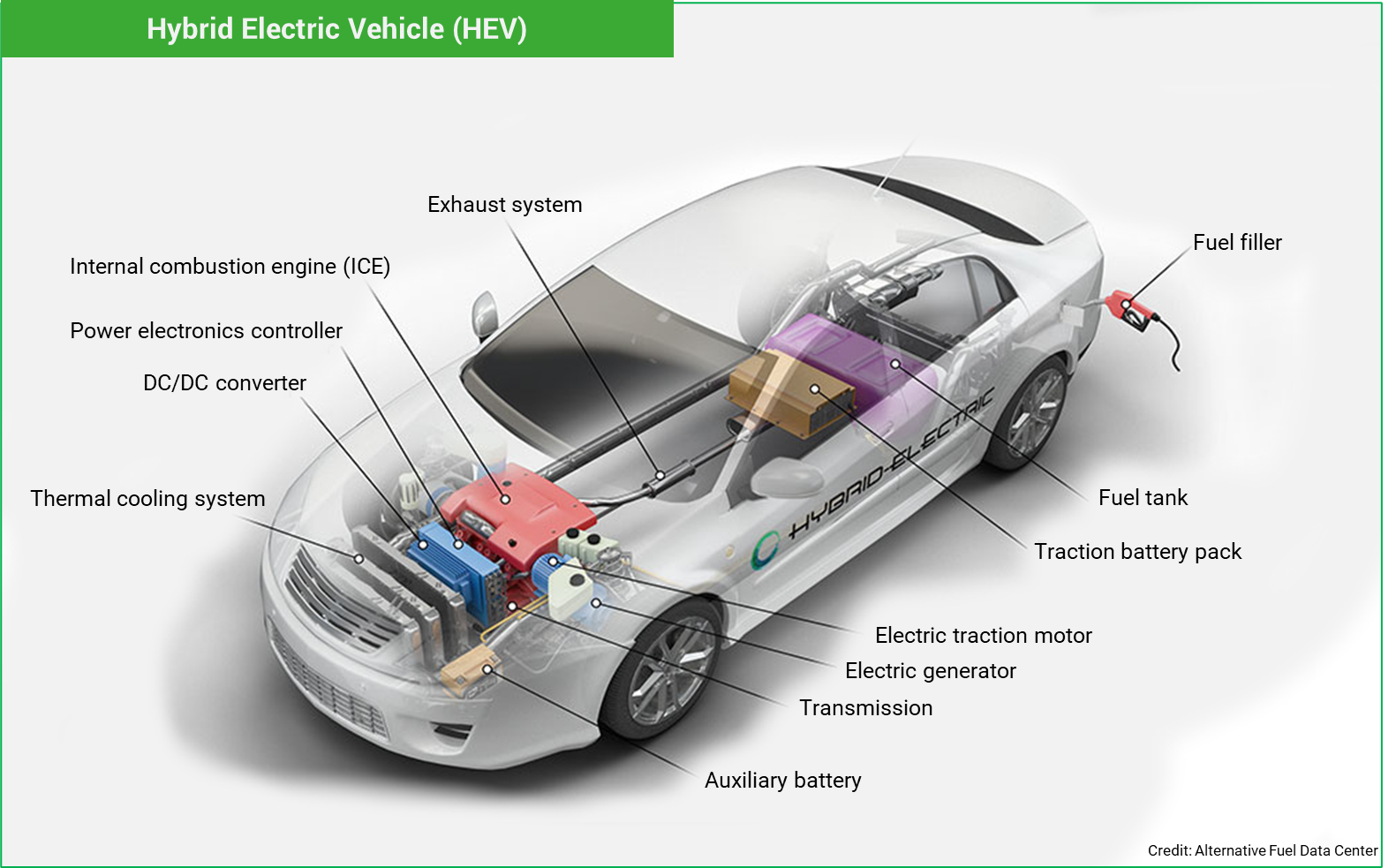
Vehicles (HEVs), sometimes referred to as ‘self-charging hybrids,’ use both an internal combustion engine
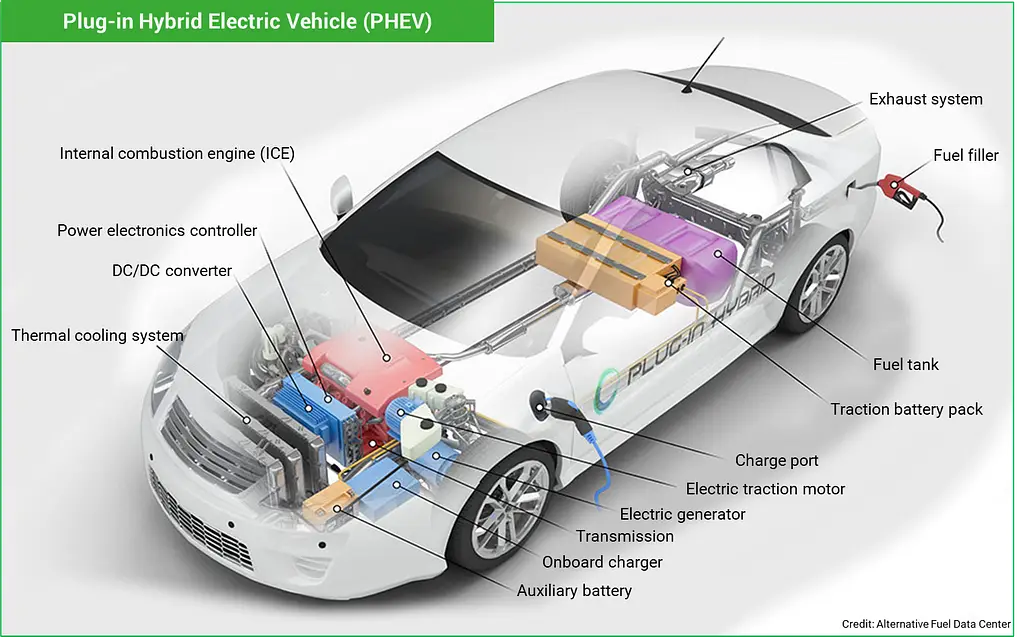
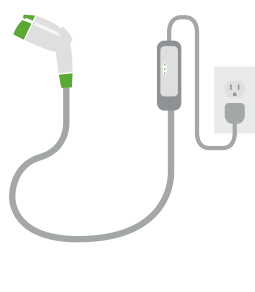
and an electric motor, which uses electricity stored in a battery pack. The main difference between a PHEV and an HEV is that you cannot plug an HEV into an EV charger to charge the battery. Instead, the onboard battery pack
is charged via the engine and regenerative braking.
The additional power generated by the electric motor may allow for the vehicle
to have a smaller engine. The battery pack can work as an auxiliary battery for
the car, helping to reduce
idling when stopped;
this results in better fuel economy and lower emissions when compared to a conventional engine car. Toyota
was one of the pioneers
in introducing and popularizing Hybrid Electric Vehicles
with the Toyota Prius.
There are different types
of HEVS, they include:
Mild Hybrid
Electric Vehicles (MHEVs)
– Also referred
to as ‘Micro Hybrids,’ ‘Power Assist Hybrids’
and ‘Battery Assisted
Hybrid Electric Vehicles
(BAHVs).’ It uses the battery
pack and electric motor to help power the vehicle and enables the engine
to be shut off when the car has stopped. MHEVs cannot drive the vehicle on
electricity alone and are not as fuel-efficient
as a full hybrid.
Full Hybrid Electric Vehicles (FHEVs) –
Full hybrids have larger capacity battery packs and more powerful electric motors than mild hybrids and can travel short distances at low speeds on battery power.

EXAMPLES OF AVAILABLE HYBRID ELECTRIC
VEHICLES (HEVs)
Audi A8 Le-tron, Audi Q7 SUV, Buick LaCrosse,
Dodge Ram 1500 eTorque, Ford Focus MHEV, Ford Mondeo Hybrid, Honda CR-Z, Honda Insight, Hyundai
IONIQ HYBRID, Hyundai
Tucson 48V, Kia Niro Hybrid,
Land Rover Discovery
Sport MHEV, Lexus CT200h, Mercedes-Benz S 400 HYBRID,
Range Rover Evoque,
Renault Clio E-Tech,
Silverado 1500, Suzuki Swift
SHVS, Toyota Prius, Toyota Yaris Hybrid.